Writing content without solid keyword research is like Beethoven writing symphonies on post-it notes and tossing them into the ocean. The work might be great, but no one ever finds it.
If your content doesn’t align with how people actually search, Google won’t surface it. Not because it’s bad, but because it’s irrelevant.
That’s exactly why keyword research still matters in 2026.
This guide helps you find keyword research services that base decisions on real demand instead of assumptions or vanity metrics.
You’ll learn:
- What keyword research actually involves (and what to ask agencies or freelancers)
- Why it still plays a critical role in modern SEO
- How the top keyword research services compare this year
Let’s start.
What’s New in Our 2026 Update
Keyword research hasn’t been replaced in 2026, but it expanded considerably. Search behavior now spans traditional SERPs, AI-powered summaries, LLM responses, and multi-intent discovery paths that didn’t exist a year ago.
As a result, keyword research today is less about producing static lists of search terms and more about building systems that map intent, topics, and demand across multiple surfaces.
The services that made the 2026 list consistently demonstrated three things:
- A clear methodology for prioritizing keywords beyond search volume
- The ability to connect keyword research to content, conversion, or pipeline outcomes
- Readiness for AI-influenced search, including semantic grouping and intent modeling
Instead of expanding the list, we refined it to highlight keyword research services that reflect how SEO actually operates in 2026: integrated, intent-driven, and built to scale.
Let’s get into it.
TL;DR - The Best Keyword Research Services
- Bluethings: Data-driven keyword research integrated directly into SEO and content strategy, with a strong emphasis on SaaS and B2B. Work focuses on competitive analysis, intent mapping, and connecting keywords to funnel stages and revenue outcomes.
- Web Tonic: Provides budget-conscious keyword research within broader SEO campaigns for small and mid-sized businesses. The emphasis is on realistic ranking opportunities and clear optimization priorities rather than complex frameworks.
- Loganix: Delivers streamlined keyword research for product- and service-based businesses. Known for fast turnaround, structured outputs, and a focus on commercial search intent.
- WebFX: Includes keyword research within large-scale SEO and digital marketing programs. Keyword insights are tied to analytics, content optimization, and performance tracking across the funnel.
- PageOnePower: Offers in-depth keyword research supported by competitive analysis and clustering. Their research is designed to inform longer-term content planning rather than one-off keyword targeting.
What Keyword Research Actually Solves
Keyword research isn’t about discovering keywords. It’s about deciding where to compete, where not to, and why.
For experienced teams, keyword research is a decision-making framework. It helps you:
- Focus resources on search opportunities that support growth goals
- Avoid content that attracts traffic but never converts
- Understand how Google currently interprets demand in your category
A keyword is only worth pursuing if it aligns with a real business outcome.
How Experienced Teams Evaluate Keyword Opportunities
Most keyword lists look impressive. Fewer are actionable. Strong keyword research focuses on evaluation and reduction, so grab our free checklist here.
SERP reality checks come first
Before trusting any metrics, review the live search results:
- What content formats dominate?
- Is intent consistent or fragmented?
- Are top-ranking pages strong, or just entrenched?
If Google hasn’t clearly resolved intent, ranking, and converting, it will be unpredictable.
Competitive gap analysis should reveal weakness, not coverage
Effective gap analysis looks for:
- Keywords competitors rank for with thin or outdated content
- Pages ranking by domain authority rather than relevance
- Topics that have been touched but not developed into authority clusters
These gaps usually represent the fastest, lowest-risk opportunities.
Authority and timeline matter more than volume
Keyword opportunity should always be assessed relative to:
- Your current domain strength
- Internal linking structure
- Content production capacity
- Time-to-impact expectations
Volume without context leads to wasted effort.
How Keywords Should Be Prioritized
For experienced teams, prioritization rarely comes down to volume and difficulty alone.
High-quality keyword lists are typically prioritized by:
- Commercial relevance and funnel alignment
- Contribution to topical authority
- Internal linking and compound impact
- Content effort versus realistic return
If a keyword doesn’t strengthen the wider search strategy, it’s rarely worth pursuing in isolation.
What Keyword Research Costs and What You’re Paying For
Keyword research pricing varies based on experience, depth, and deliverables.

Keyword research can cost anywhere from $100 to over $5,000, and it really depends on what you’re getting and who’s doing the work.
If you hire a freelancer just to dig up some basic keywords, you might only spend a couple hundred bucks. Hourly rates for this kind of work typically land between $25 and $150, depending on their experience and location.
On the other hand, if you're working with an SEO agency to do a full-blown keyword strategy (something that includes deep competitor analysis, search intent mapping, and a roadmap for content) it’s a much bigger investment.
Most agencies charge somewhere between $1,000 and $2,500 for a one-time keyword research project.
And if you’re in a super competitive niche like legal or finance, it can climb past $5,000, especially if they’re building out an entire content plan too.
Now, sometimes keyword research isn’t a standalone service; it’s bundled into broader SEO packages. In those cases, you're looking at monthly retainers that usually run from $500 to $5,000, depending on the size of your site and how aggressive your SEO goals are.
If you're planning to do it yourself, keep in mind the tools you’ll need.
Platforms like Ahrefs or its alternatives (SEMrush, Moz) can cost anywhere from $100/month up to $1,000+/month for their more advanced plans. That’s not counting the learning curve or the time it takes to make sense of all the data.
That’s why you may need a professional service, which leads us to our next point.
Best Keyword Research Services in 2026
Below are the keyword research services that stand out in 2026 based on how they prioritize intent, execution, and real demand. Each takes a different approach, depending on whether keyword research is treated as a standalone input or embedded within broader SEO strategy
1. Bluethings: Best Overall
Bluethings delivers data-driven, results-oriented keyword research built around how people actually search and how the right content turns that demand into revenue. This is the work we focus on: diving into data, identifying overlooked opportunities, and turning strategy into measurable growth.
Our approach starts with analyzing existing performance, competitive landscapes, and real audience intent before expanding into opportunity discovery. Bluethings uses professional SEO tools such as Ahrefs and Semrush to surface keyword opportunities that are realistic to rank for and commercially meaningful.
In practice, this helps teams move faster and attract higher-quality organic traffic by enabling them to:
- Prioritize keywords with strong search demand and manageable competitive density
- Map keywords to different stages of the buyer journey and sales funnel
- Build content plans designed to convert, not just rank
For example, by partnering with a B2B SaaS company looking to strengthen its search visibility, Bluethings implemented strategic link building and content initiatives that drove a 175% increase in top query impressions and a 50% monthly rise in clicks. And all while expanding keyword visibility and domain authority.
.webp)
It’s exactly the kind of thoughtful, growth-focused work Bluethings is known for, and the reason our clients see results that matter.
Industries: Retail, eCommerce, Technology (with a strong emphasis on B2B and SaaS)
Key services: Full SEO audits, keyword discovery and mapping, link building, content strategy, analytics integrations, ongoing keyword and performance tracking
Notable clients: Hurom, Tiddle, ThreatX, Arielle, Content Allies, iWave
Reason to work with Bluethings: A strong choice for teams that want commercially focused keyword research and SEO strategy, supported by execution aimed at sustainable, long-term growth rather than short-term ranking wins.
2. Web Tonic: Best Affordable Services
Web Tonic is built for small and mid-sized businesses that want straightforward SEO direction without enterprise pricing or long-term retainers. Keyword research is delivered as part of their SEO work, alongside paid media and website optimization, which keeps costs predictable and execution practical rather than overengineered.
Instead of producing standalone keyword documents, Web Tonic integrates keyword research into active campaigns and tracks performance through ongoing reporting and dashboards. This makes it easier for lean teams to see what’s working, adjust priorities, and avoid unnecessary SEO complexity.
Industries: Retail, eCommerce, Technology
Key services: Keyword research within SEO services, SEO audits, competitor analysis, analytics integration, ongoing keyword and performance tracking
Notable clients: Not publicly disclosed
Reason to work with Web Tonic: A dependable option for teams that want budget-friendly keyword research embedded in real execution.
3. Loganix: Affordable Product and Service Keywords
Loganix is built around speed and precision, offering keyword research as a clearly scoped, standalone service rather than a bundled SEO engagement. It’s designed for teams that know what they’re selling and need commercial keyword direction quickly, without onboarding into a long-term retainer.
Instead of exploratory or full-funnel research, Loganix works from client-supplied products or services and returns tightly grouped keyword lists organized by intent and topical relevance. Delivery is typically fast, usually within two business days. This makes it well-suited to agencies, in-house teams, or marketers working against fixed timelines.
Industries: eCommerce, local services, SaaS, professional services
Key services: Product and service keyword research, keyword grouping, search intent analysis, optional SEO content
Notable clients: Not publicly disclosed
Reason to work with Loganix: A practical choice for teams that want quick, affordable, buyer-intent keyword research without committing to full-scale SEO programs.
4. WebFX: Comprehensive SEO Campaigns
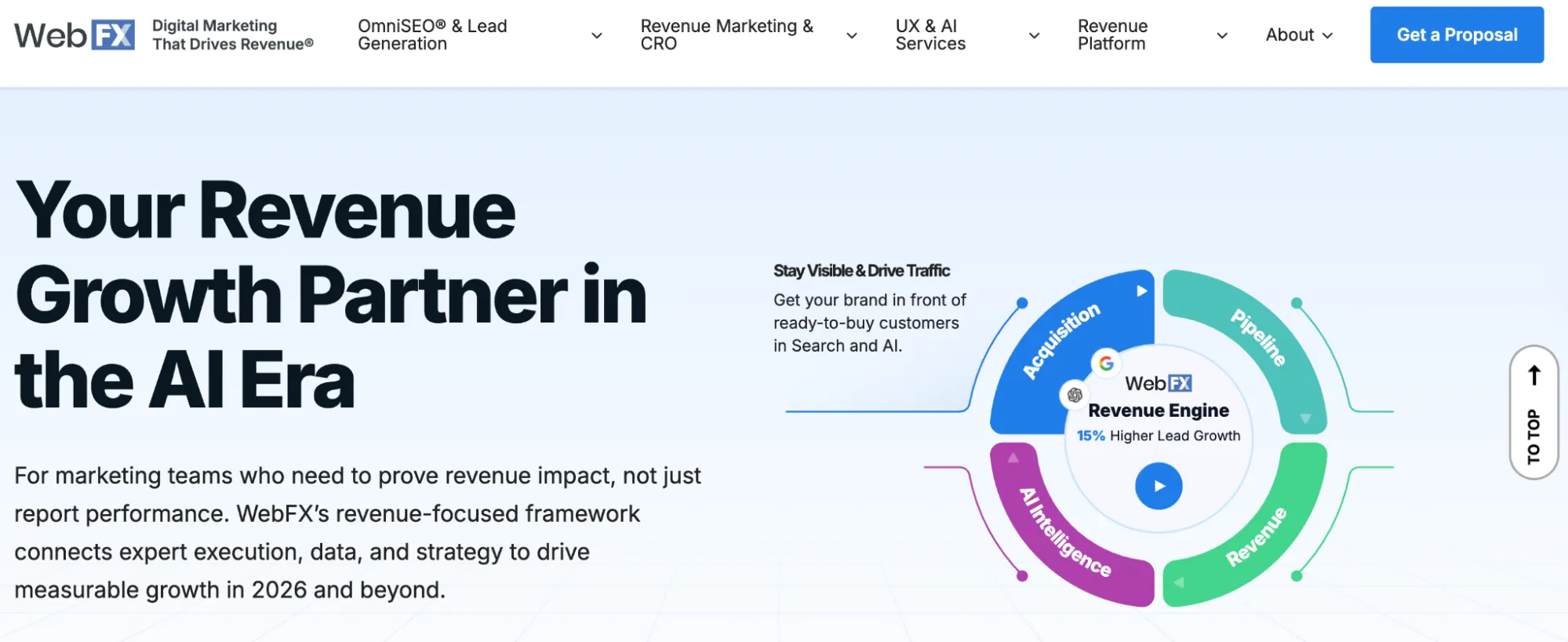
WebFX operates at the opposite end of the spectrum from standalone keyword research vendors. Keyword research is embedded inside large, managed SEO and digital marketing campaigns built for organizations that want ongoing execution, reporting, and revenue attribution.
Rather than handing off keyword lists, WebFX connects keyword insights directly to on-page optimization, content production, and technical SEO, supported by competitor analysis and forecasting.
Pro tip: That approach reflects broader industry outcomes: strategic keyword research paired with content development has been shown to deliver up to ~748 % ROI over basic keyword programs over three years.
Their use of proprietary platforms alongside standard SEO tools allows keywords to be tracked against lead generation and ROI over time.
Industries: eCommerce, professional services, healthcare, education, enterprise
Key services: Keyword research, SEO audits, on-page SEO, competitor analysis, technical SEO, content optimization, ROI tracking
Notable clients: Not publicly disclosed
Reason to work with WebFX: A strong choice for organizations that want keyword research delivered inside a comprehensive, execution-led SEO campaign.
5. Intero Digital: Comprehensive SEO Services
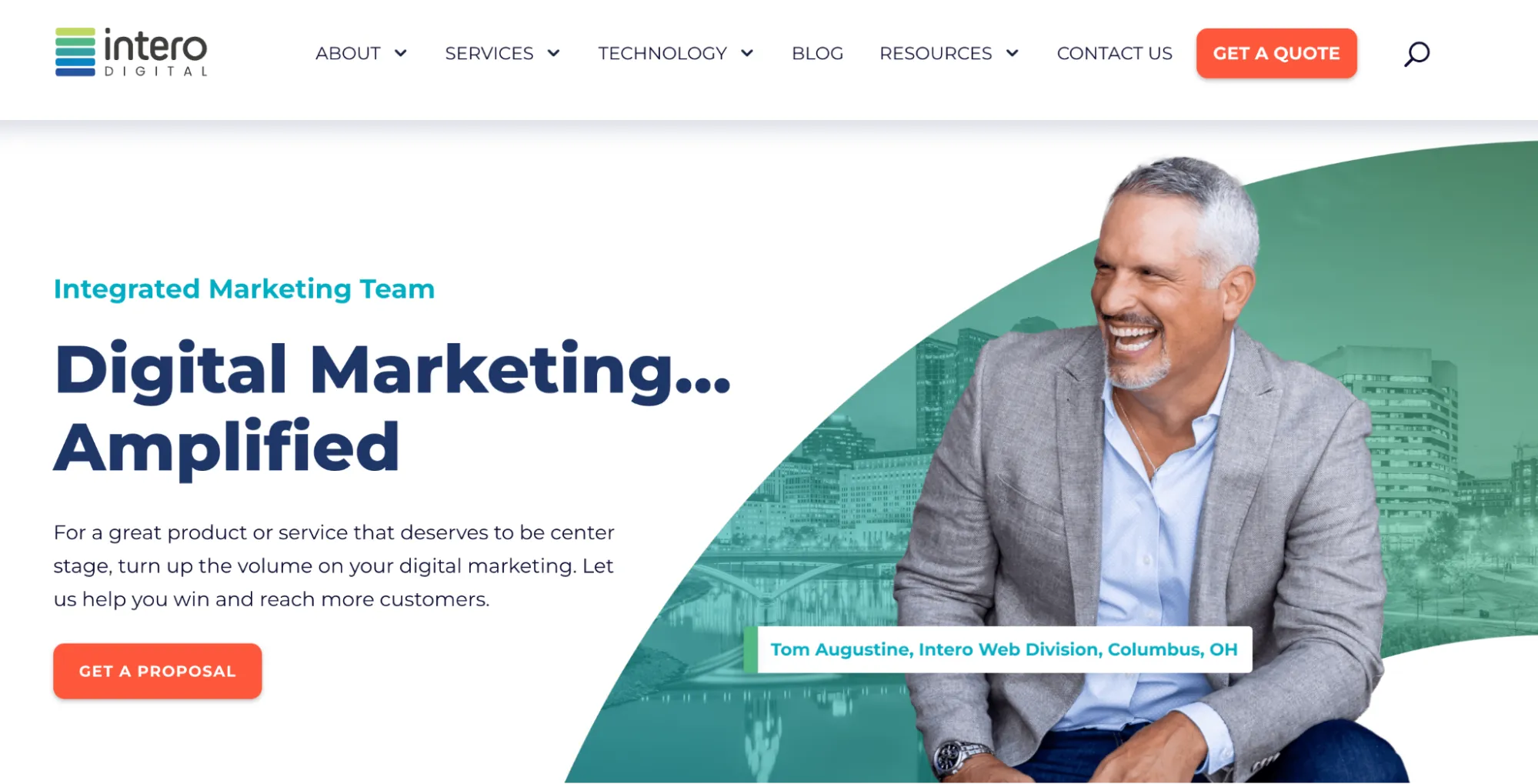
Intero Digital brings a content-led SEO model shaped by its acquisition of Influence & Co. Keyword research is designed to support sustained publishing programs rather than short-term ranking wins. The emphasis is on building authority through topics and expertise instead of chasing isolated keywords.
They don’t treat keyword research as a deliverable. Intero Digital folds it directly into SEO and content retainers. Keywords are selected based on their ability to be supported by long-form, authoritative content and are mapped to formats and themes that can be executed consistently.
Industries: B2B, SaaS, professional services, enterprise brands
Key services: Keyword research, SEO audits, competitor analysis, SEO content strategy, content creation
Notable clients: Adobe, Microsoft, PayPal, SAP, Dell
Reason to work with Intero Digital: Best suited for teams that want keyword research deeply embedded in content production and long-term SEO execution, not standalone reports.
6. PageOnePower: Extensive Keyword Research
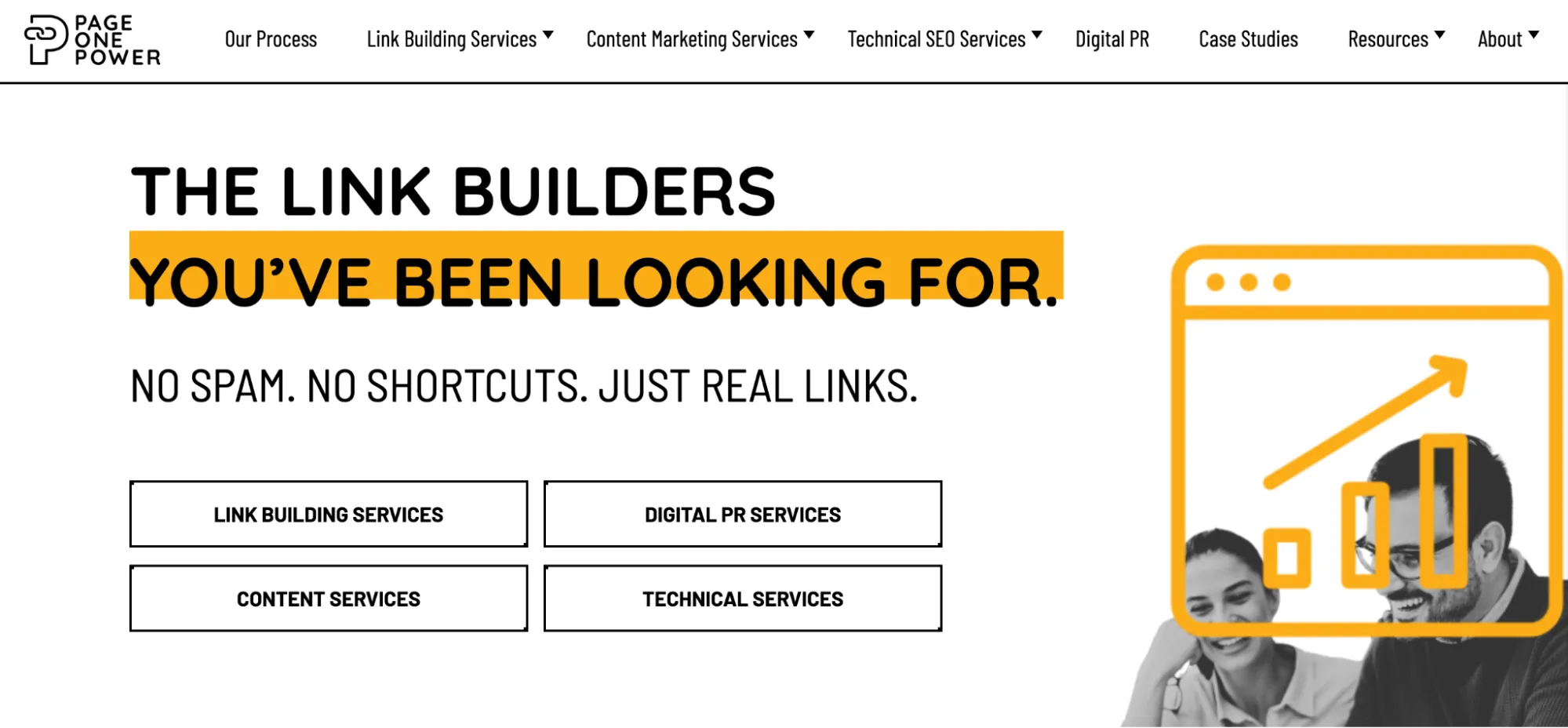
PageOnePower treats keyword research as a standalone, consultative service, not a task inside a larger SEO package.
The emphasis is on clarity: clients receive keyword data, yes, but they also get context around why specific terms matter and how to use them. Research outputs are organized into intent-based segments and clusters, supported by competitor and industry analysis.
What sets PageOnePower apart is the walkthrough component, where findings and recommendations are reviewed directly with the client. This makes the research easier to apply internally or hand off to content and SEO teams.
Industries: SaaS, eCommerce, B2B, professional services
Key services: Keyword research, competitor analysis, keyword clustering, SEO consulting, content support
Notable clients: AARP, BigCommerce, Lucidchart, Northwestern Mutual
Reason to work with PageOnePower: Ideal for teams that want keyword research they can actually implement.
7. Codarity: Conversion-Led SEO
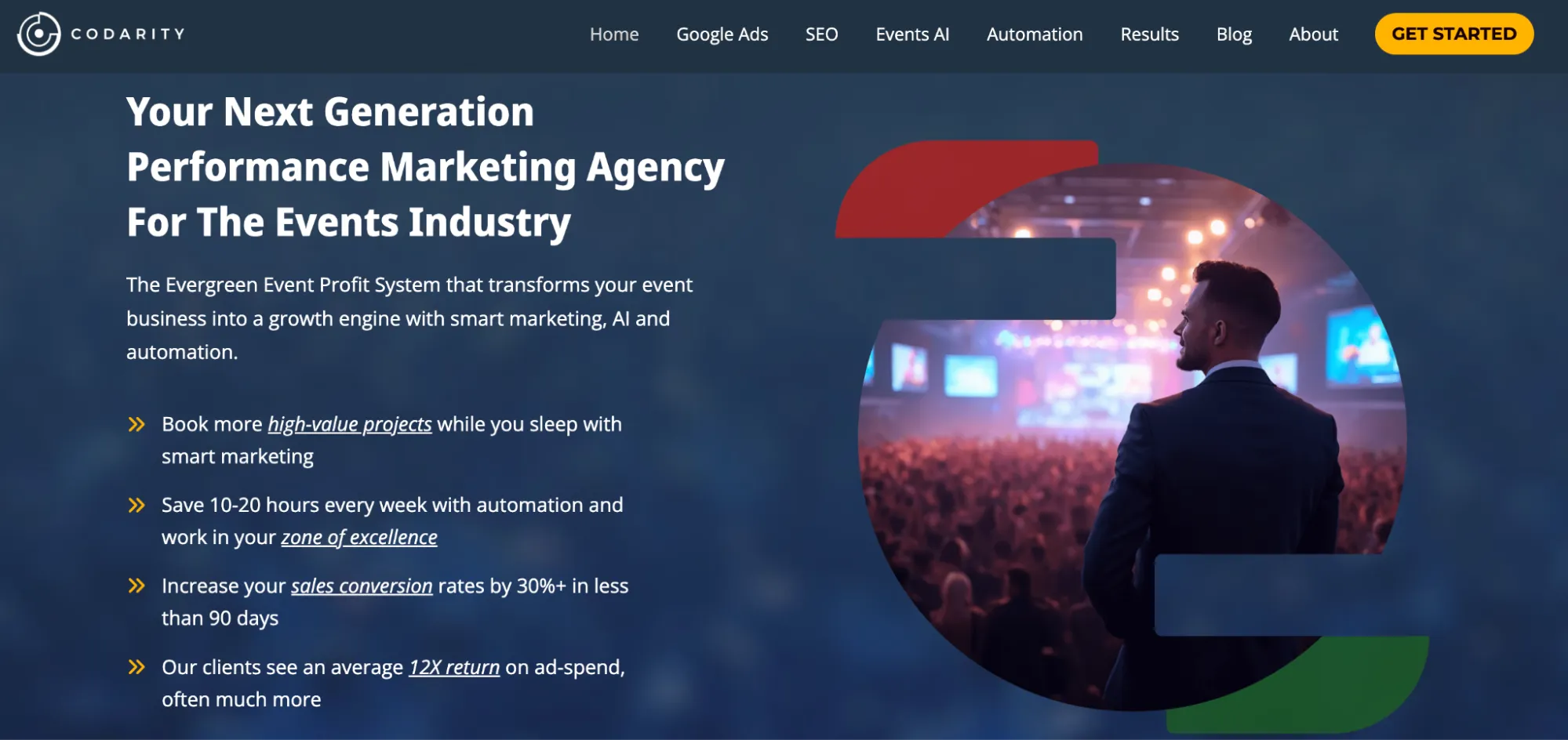
Codarity approaches keyword research through a conversion-first lens, integrating it with overall SEO best practices, web design, and PPC.
As such, it won’t be an isolated SEO task (but, on the other hand, you can’t choose to pay for it separately, either).
The focus is on how keywords support real user paths, so they don’t only focus on traffic volume. In fact, keyword research is offered as an add-on within ongoing SEO programs and is shaped by commercial intent and conversion potential.
This all makes Codarity particularly relevant for teams redesigning websites, launching new acquisition funnels, or trying to connect SEO performance more directly to revenue outcomes.
Industries: SaaS, professional services, eCommerce, B2B
Key services: SEO audits, competitive research, keyword research (add-on), conversion-focused SEO, link building, penalty recovery
Notable clients: Not publicly disclosed
Reason to work with Codarity: Best for teams that want keyword research tied to conversion strategy.
8. SimpleTiger: Fast SEO and PPC for SaaS Companies
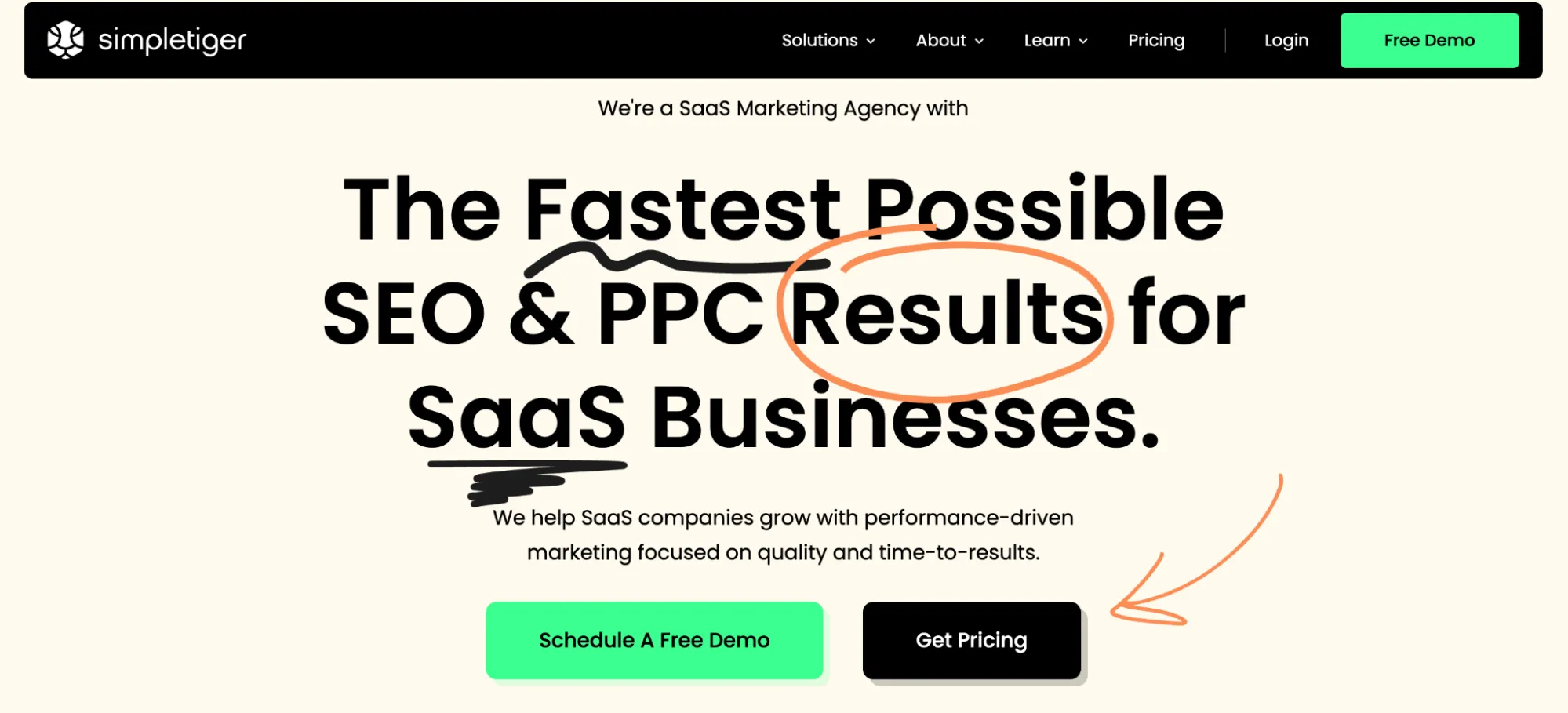
SimpleTiger is a SaaS-only agency built for speed. Keyword research is designed to support rapid execution across both SEO and PPC.
Rather than producing abstract research outputs, SimpleTiger maps keywords directly to funnel stages and pages, with competitor context and implementation guidance baked in. The emphasis is on getting keywords into use quickly across content, landing pages, and paid campaigns.
Side note: This approach is supported by broader industry data showing that integrating SEO and PPC keyword strategies can roughly double ROI compared to running them separately, because shared keyword insights help tighten targeting and improve conversions across both organic and paid channels.
Industries: SaaS only
Key services: Keyword research, competitor analysis, keyword-to-funnel mapping, SEO and PPC alignment, content keyword recommendations
Notable clients: Not publicly disclosed
Reason to work with SimpleTiger: A strong option for SaaS teams that want execution-ready keyword research aligned with both organic and paid growth.
9. Searchberg: Unique Money-Back Guarantee
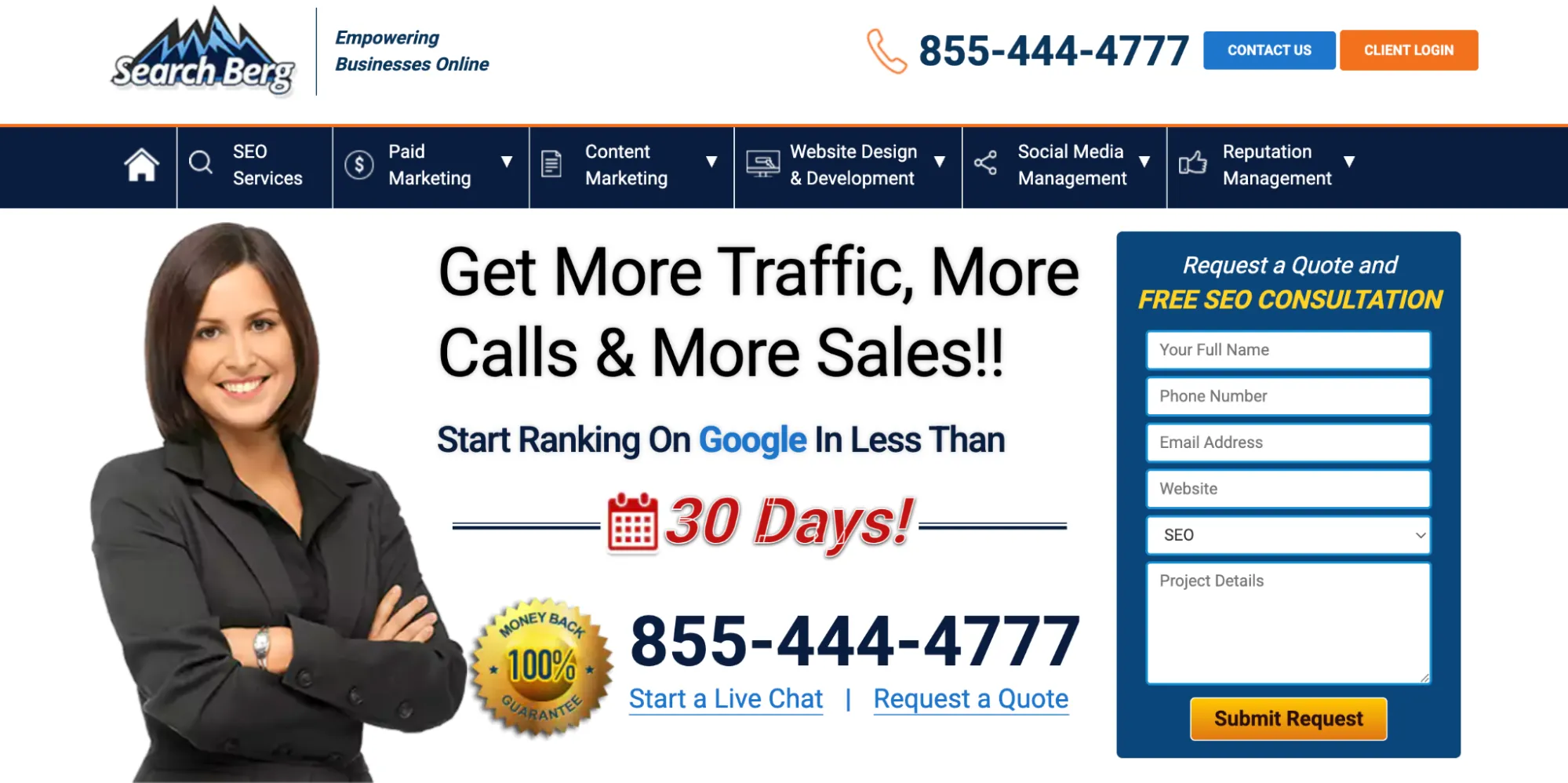
Searchberg differentiates itself through a performance-based guarantee, positioning keyword research inside an SEO model built around accountability and early traction. The emphasis is on reducing upfront risk for businesses that want clear signals of progress.
Keyword research is developed to support execution, so it can’t be delivered as a standalone asset. Keywords are profiled using audience insights, niche trends, and competitor data, then applied directly to content and link-building efforts as part of broader SEO programs. This approach allows research to translate quickly into action across multiple industries.
Industries: Healthcare, finance, real estate, eCommerce, professional services
Key services: Keyword research and profiling, competitor analysis, SEO audits, content creation, link building
Notable clients: Not publicly disclosed
Reason to work with Searchberg: A practical option for teams that want keyword research paired with execution and backed by a performance-focused guarantee.
10. BKA Content: All-Inclusive SEO Company
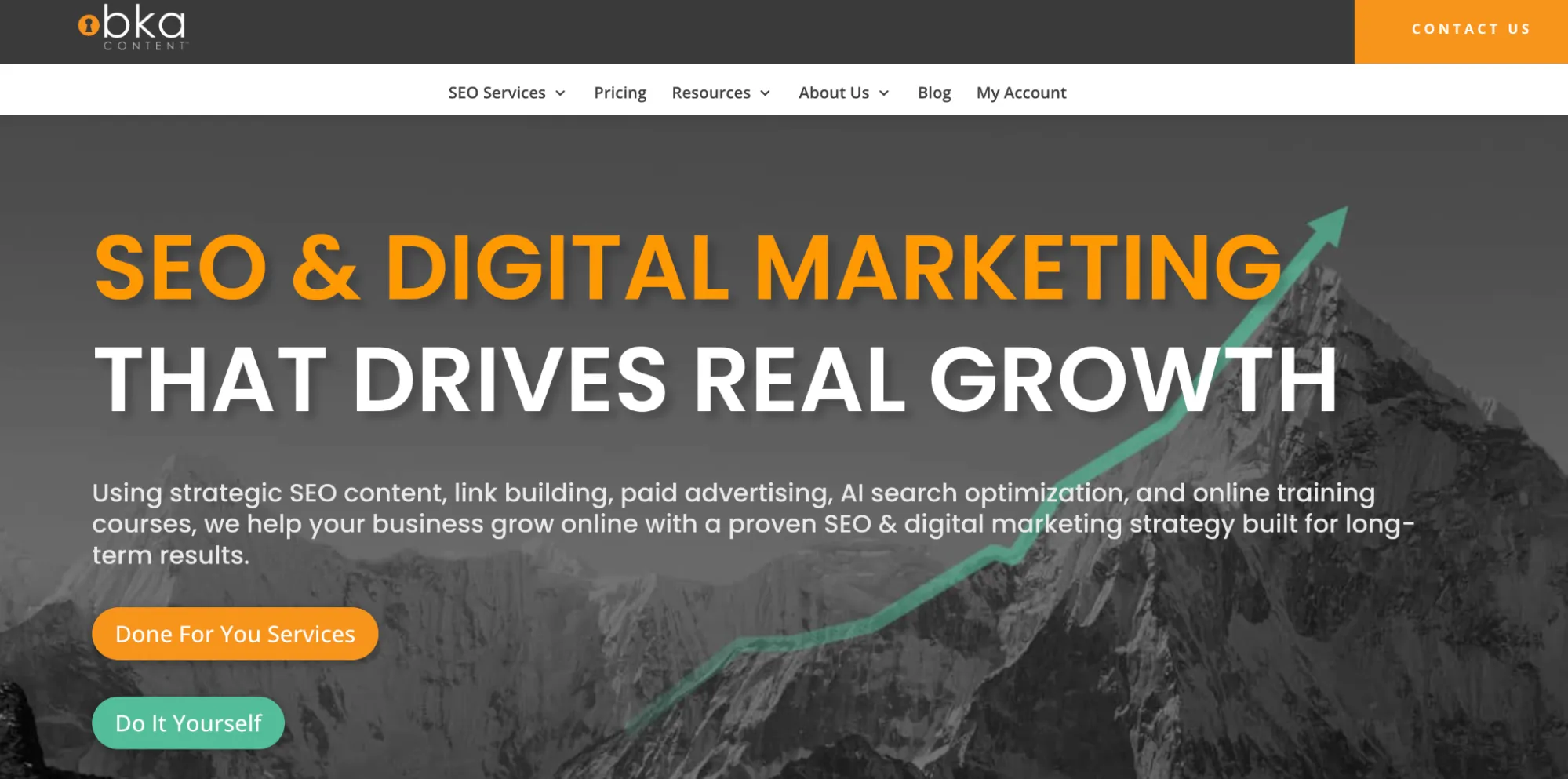
BKA Content is structured around ongoing content production, with keyword research embedded directly into its managed SEO services. Here, keywords are selected to feed blog writing, on-page optimization, and long-term content planning from the outset.
Keyword decisions are made to support consistent publishing and steady organic growth, keeping content aligned with search intent while remaining practical to execute month after month.
Industries: SaaS, eCommerce, professional services, B2B
Key services: Keyword research, SEO content strategy, blog writing, on-page SEO, white-hat link building
Notable clients: Not publicly disclosed
Reason to work with BKA Content: A solid option for teams that want keyword research tightly integrated with consistent, SEO-driven content production.
Key Factors to Consider When Choosing a Keyword Research Service in 2026
Choosing a keyword research service in 2026 is less about tools and more about judgment. The right partner helps you decide where to compete, where not to, and how search demand actually translates into growth in your market.
They Understand How Demand Actually Manifests in Your Market
Keyword research in 2026 isn’t just about Google SERPs. Search behavior now spans classic results, AI summaries, product-led discovery, and brand-driven queries that don’t look like keywords at all.
Neil Patel explains the new rules of SEO and how multi-channel search actually works:
In that context, the strongest keyword research services already understand how demand shows up in your category, whether that’s SaaS feature comparisons, B2B problem awareness, local intent modifiers, or high-intent product searches. When that context is already there, discovery conversations move faster and research outputs are immediately usable.
Questions to ask
- What does high-intent search look like in our category right now?
- Where do teams usually misjudge demand in this market?
- Which competitors are winning visibility without necessarily having the best product?
Red flags
- They rely on generic keyword categories across all industries
- They can’t explain how intent shifts across the funnel in your space
- Everything defaults to “we’ll validate this later”
They Can Explain Trade-offs in Their Tactics
Experienced teams need decision support, and good keyword research surfaces trade-offs: speed vs. authority, relevance vs. reach, effort vs. payoff.
The best SEO experts can explain why certain keywords are deprioritized, not just why others are chosen. They can articulate what not to pursue, where SEO will stall, and where momentum compounds.
Questions to ask
- Why would you ignore this high-volume keyword?
- What would you delay even if it looks attractive on paper?
- Where does keyword research usually mislead teams at our stage?
Red flags
- Every keyword is framed as an opportunity
- No discussion of risk, sequencing, or constraints
- Recommendations sound interchangeable across clients
They Connect Keyword Research to Execution, Not Artifacts
In 2026, keyword research that doesn’t directly influence content, pages, or conversion paths is operational debt. Strong providers design research to plug directly into execution, from content planning and site architecture to internal linking or paid search alignment.
The difference isn’t the spreadsheet. It’s whether the research changes what your team actually builds next.
Questions to ask
- How does this research translate into publishing or optimization decisions?
- What typically gets implemented first, and why?
- Where do teams fail to act on keyword research?
Red flags
- Research is delivered with no implementation guidance
- Outputs require heavy interpretation by your team
- No visibility into what “success” looks like post-handoff
They Prioritize Judgment Over Volume
High-quality keyword research is reductive. It removes options instead of inflating them.
In our experience, the most valuable research narrows focus to what your team can realistically win. Volume without judgment leads to wasted effort.
Questions to ask
- How do you decide which keywords are not worth pursuing?
- How does domain strength influence prioritization?
- What assumptions are baked into your recommendations?
Red flags
- Success is measured by keyword count
- Difficulty scores are treated as absolute
- No discussion of internal constraints or timelines
They Are Prepared for AI-Influenced Search
Search visibility now includes AI summaries, semantic clustering, and intent interpretation beyond exact-match queries. Keyword research services that haven’t adapted still optimize for a world that no longer exists.
Modern keyword research reflects how topics, entities, and intent clusters influence visibility across multiple surfaces instead of just blue links.
Questions to ask
- How do you account for AI summaries and semantic grouping?
- How does this research support topical authority?
- Where does classic keyword targeting still matter, and where doesn’t it?
Red flags
- AI search is dismissed or hand-waved
- Research relies entirely on static keyword metrics
- No discussion of topic modeling or intent overlap
Which Keyword Research Services Will You Choose?
Every keyword research service on this list is capable, but they solve different problems. The right choice depends on how you plan to use keyword research. Will it be a fast tactical input, a content planning system, or a decision framework tied to growth and revenue?
That’s why strategy conversations matter.
Asking the right questions upfront will quickly reveal which partners think in terms of trade-offs, prioritization, and execution, and which are just interested in outputs.
If you’re looking for a keyword research partner that combines commercial judgment with practical execution, particularly in B2B and SaaS, Bluethings offers a scalable, data-driven approach built for long-term impact.
If you want to explore whether that approach fits your goals, set a free strategy call, and let’s get started.
FAQs
What are keyword research services?
Keyword research services help teams make informed decisions about where to compete in search. The value isn’t the keywords themselves, but the prioritization, trade-offs, and execution guidance behind them.
How much does keyword research cost?
Costs reflect judgment, not data volume. Tactical research may cost a few hundred dollars, while high-quality research that informs content, structure, and growth strategy is typically embedded in SEO programs costing several thousand dollars or more.
Which keyword research service is best?
The best service is the one aligned with how you plan to execute. Fast, standalone research works for tactical needs, while growth-stage and enterprise teams benefit from research embedded into ongoing SEO and content strategy.
Is keyword research still relevant in 2026?
Yes, but its role has evolved. Keyword research now supports intent modeling, topic authority, and multi-surface visibility, not just rankings for individual terms.
Can experienced teams do keyword research themselves?
Yes, but time and bias are real constraints. External services add value through objective prioritization, competitive context, and clearer decision-making, especially at scale.